- Your cart is empty
- Continue Shopping

MEGA SALE DISCOUNT ALL ITEM UP TO 30% FOR CHRISTMAST EVENT
₹3,600.00
Availability: 100 in stock
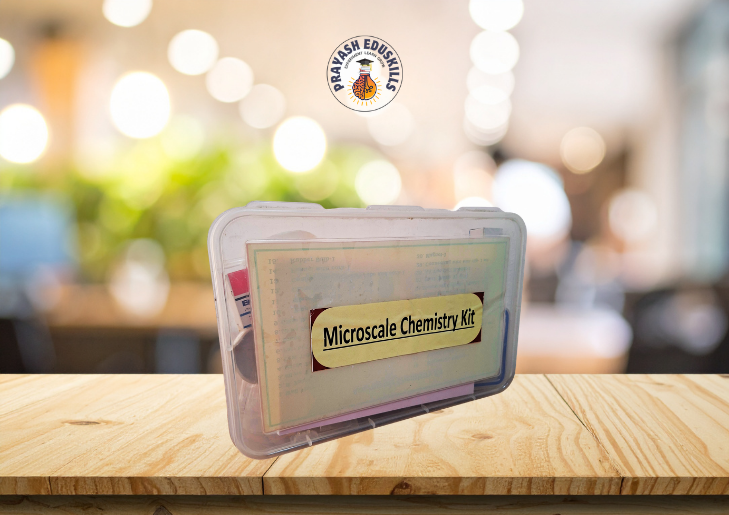
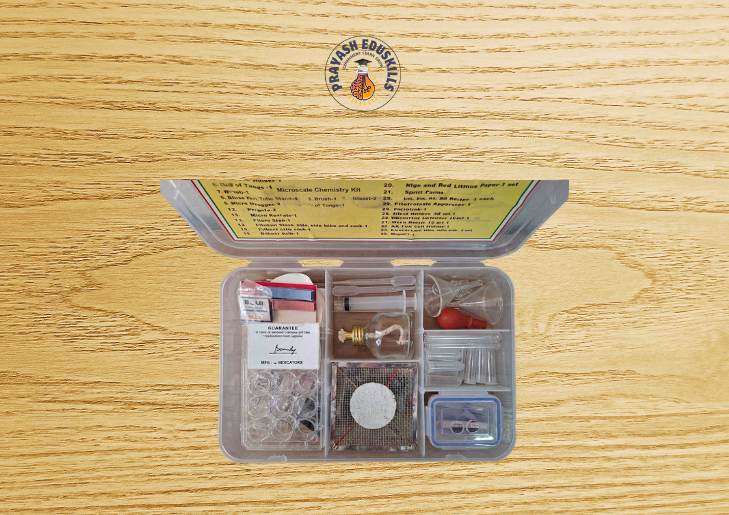
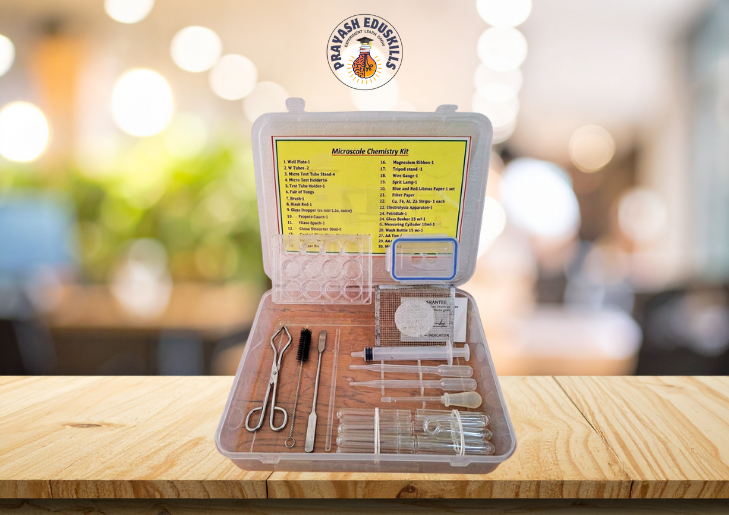
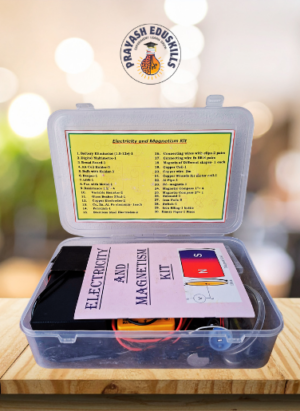
The Microscale Chemistry Kit is an educational laboratory set designed to carry out a wide range of chemistry experiments using micro‑quantities of reagents. It comes in a sturdy transparent plastic box that organizes all glassware, plasticware and accessories so teachers and students can quickly locate and use each item during practical sessions.
From the list printed inside the lid, the kit typically contains a well plate, V‑tubes, micro test tube stands and holders, micro test tubes, droppers and syringes for accurate handling of very small liquid volumes. It also includes tongs, brushes, spatulas, a china dish, wire gauze, tripod stand, spirit lamp, litmus papers, filtration materials and small metal strips or samples, allowing standard school‑level experiments like boiling point and melting point determination, sublimation, reactions of acids and bases, precipitation, and simple redox activities.
Because experiments are done on a microscale, the kit significantly reduces chemical consumption, minimizes waste and exposure, and shortens experiment time while still giving clear, observable results. It is suitable for middle‑ and high‑school chemistry labs and for outreach or demonstration activities where portability, safety and cost‑effectiveness are important, while keeping students actively engaged in hands‑on inquiry.
If you want, I can next turn this into SEO‑optimized bullet points for Amazon or Flipkart listings tailored to Indian school buyers.
The integration of practical skills with traditional academic subjects is becoming increasingly important in modern education. To address this need, schools are encouraged to establish composite skill labs and utilize specialized kits to support experiential learning and skill development.
Schools are advised to set up either one composite skill lab measuring 600 sq. ft for classes VI–XII, or two separate labs of 400 sq. ft each—one for classes VI–X and another for classes XI–XII.
Reviews
There are no reviews yet.