- Your cart is empty
- Continue Shopping

MEGA SALE DISCOUNT ALL ITEM UP TO 30% FOR CHRISTMAST EVENT
₹2,900.00
Availability: 100 in stock
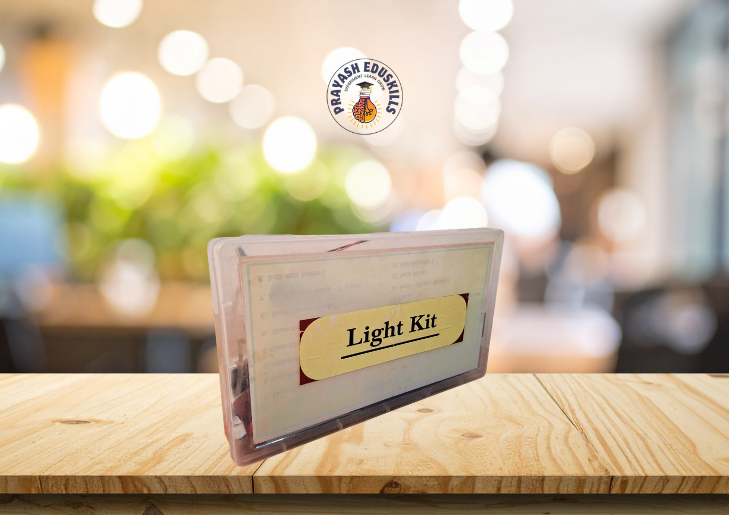
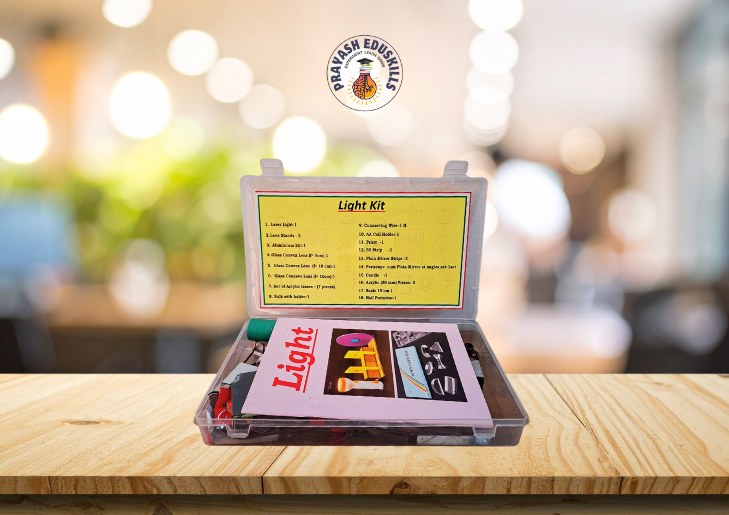
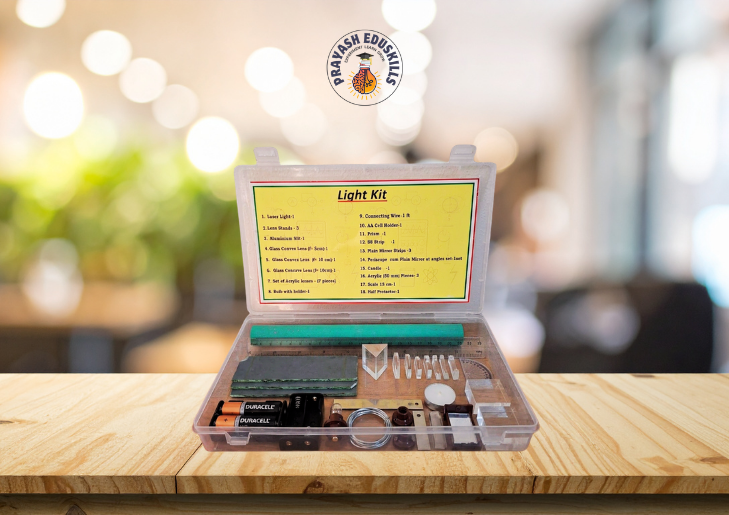
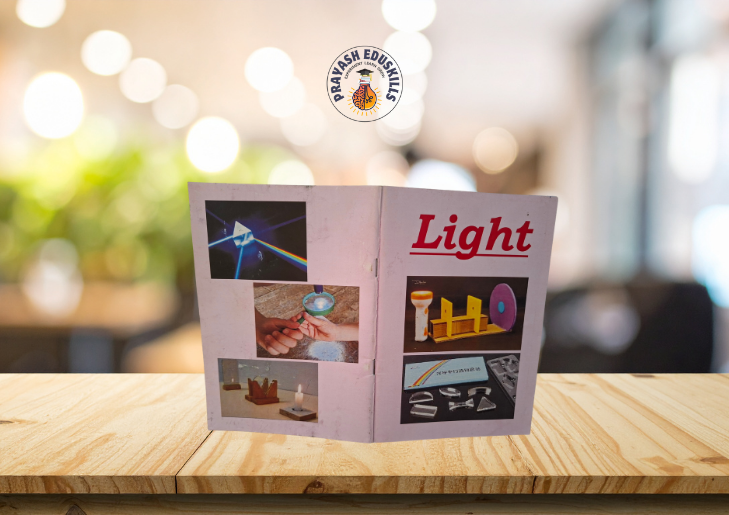
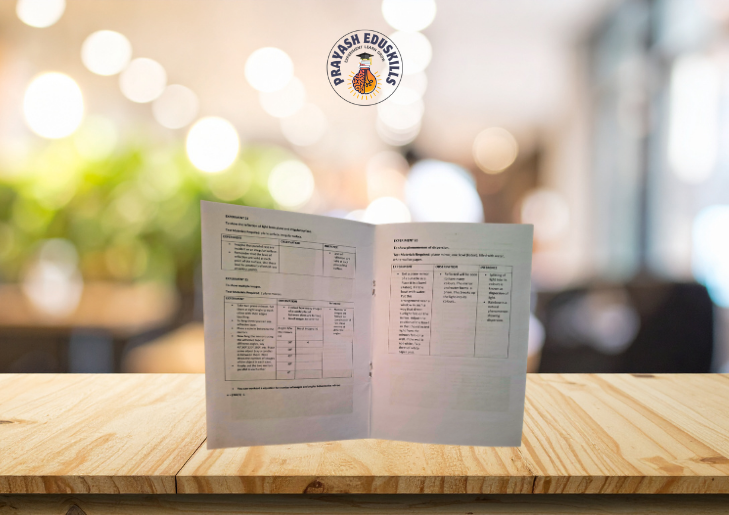
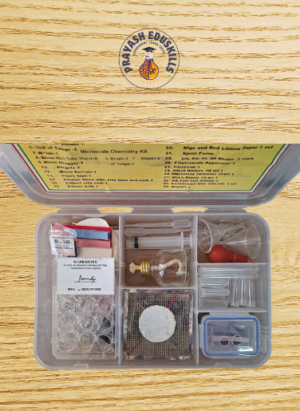
The Light Kit is an educational optics set designed to help students practically explore how light travels, bends, reflects and forms images. Packed in a transparent plastic case, it keeps all optical components, electrical parts and the activity manual neatly arranged for classroom or lab use.
The list visible on the box shows that the kit typically contains a laser light source, AA cell holder with batteries, connecting wire, bulb with holder, and multiple supporting accessories for ray‑path experiments. It also includes glass convex and concave lenses, a set of acrylic lenses, an aluminium slit, a prism, plain mirror strips, a periscope‑cum‑mirror setup, a scale, half protractor and other small parts needed to trace and measure angles of incidence, reflection and refraction.
Using these components, teachers and students can perform a wide range of optics activities such as tracing light rays through lenses and prisms, verifying laws of reflection, studying refraction at different angles, demonstrating dispersion of white light into a spectrum, and exploring image formation by mirrors and lenses. The kit supports middle‑ and high‑school physics curricula and is suitable for classroom demonstrations, lab practicals and STEM clubs that want a ready‑to‑use, well‑organized solution for learning about light in an interactive way.
The integration of practical skills with traditional academic subjects is becoming increasingly important in modern education. To address this need, schools are encouraged to establish composite skill labs and utilize specialized kits to support experiential learning and skill development.
Schools are advised to set up either one composite skill lab measuring 600 sq. ft for classes VI–XII, or two separate labs of 400 sq. ft each—one for classes VI–X and another for classes XI–XII.
Reviews
There are no reviews yet.